About Rubasse x Tomas Gruber
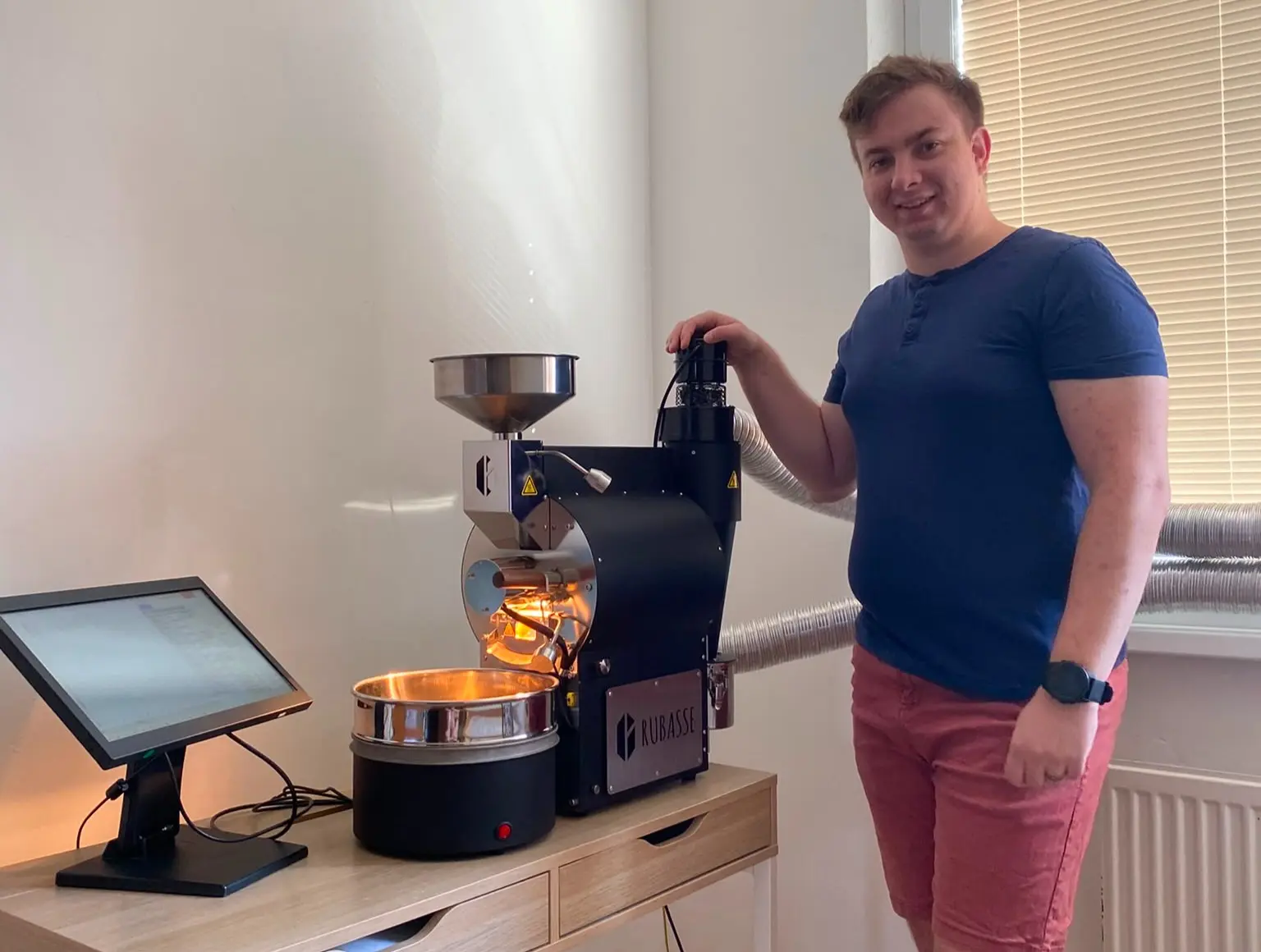
Tomas Gruber roasts in Bratislava, Slovakia, where he is building a roasting style around specific processing methods and exotic varieties. His focus at this stage is experimentation, profile development and his own progression as a roaster — learning how origin, variety, processing method and roast parameters affect the final cup. A small side business is already planned, supplying colleagues, friends and a few local cafés owned by friends, and will begin as soon as he finds a suitable roasting space nearby at a reasonable cost.
What He Values Most About Roasting on the Rubasse Nano
“The Rubasse feels like a sports car: responsive, precise, and direct.”
The feature Gruber returns to is automatic roasting, though he is careful to define its limits.
“Once I have developed a profile, I can use it again with the same coffee and similar enough outside parameters. Profiles created in twenty per cent humidity do not do so well in ninety — they work, but not one to one.”
Within those conditions, the value of a saved profile becomes clear in everyday use. His household goes through roughly six hundred grams of coffee each week, and consumption rises whenever friends are visiting. When supplies run out, his wife can start a saved profile directly, without adjusting a single variable, and the roast still comes out as intended. Fresh coffee returns to the shelf within the week without requiring his attention at all — a modest detail on paper, but one that separates a profile that is genuinely repeatable from a profile that is repeatable only in the hands of the person who built it.
Asked to characterise the machine, Gruber reaches for a comparison with cars. He describes adjustments as taking effect immediately, where a conventional roaster carries more momentum and has to be managed further in advance. Both, he is careful to note, get you from A to B and can achieve similar results. The optimal track is simply different.
The Problems Rubasse Solved for Us
Gruber is direct about what any machine can and cannot do for a roaster.
“Every roasting machine has its own characteristics, strengths, and limitations. No machine is achieving perfect results without work.”
Within that framing, the difference he singles out against the roasters he has used before is how easily he can achieve a consistent roast level throughout the entire bean. The important thing, he adds, is to understand a machine’s feature set and learn to use those characteristics to your advantage.
One refinement remains on his list. He would welcome optional physical buttons or knobs alongside the touchscreen, so that adjustments could be made by reference to the curve rather than by locating a specific control on screen — much as adjusting the air conditioning in a modern car is difficult without taking your eyes off the road.
Why We Highly Recommend Rubasse
Gruber recommends the Rubasse on the strength of three things: a roast level that comes out consistent throughout the bean, saved profiles that hold reliably enough to be handed to someone else, and a directness of response he had not found in the roasters he used before. His own purchase was, by his own description, a blind buy — and one that worked out well.
He is equally clear that the machine rewards first-hand experience. He had studied the features and watched roasting demonstrations beforehand, yet found that neither compares with using the machine and working through the process himself. Because the Rubasse operates differently from the gas roasters most people can readily find nearby, his practical advice to anyone considering one is to ask plenty of questions, meet the team at an exhibition where possible, or speak to a local Rubasse owner.
“It feels different from a conventional drum roaster and different from a hot air roaster, but in a good way.”